


Passport to Zero
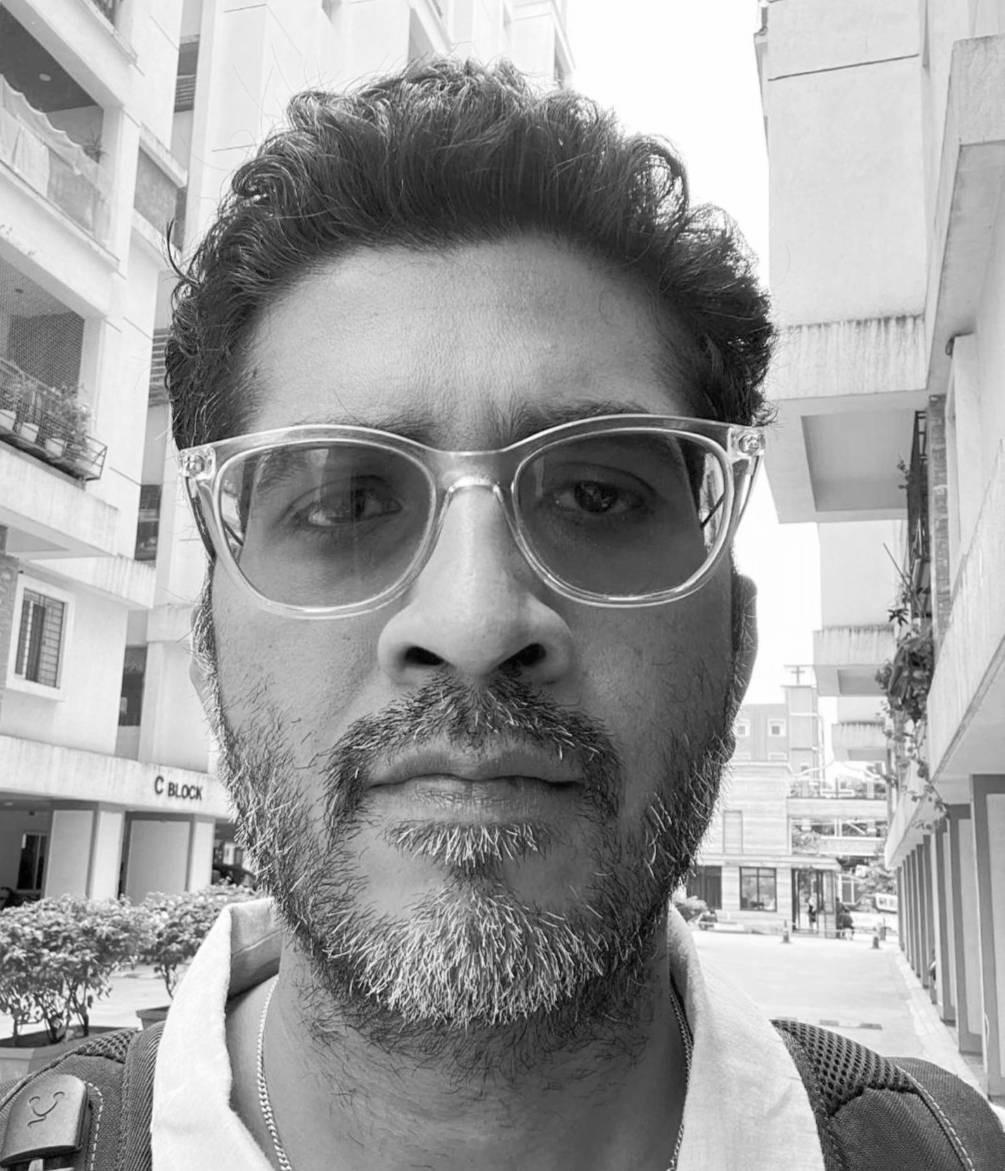
The Man without a Passport
Before I ever boarded a flight, I had already rehearsed my exile. Three times I had applied for a passport. Three times, rejection. Bureaucratic silence and a dead end each time. Somewhere along the line, I stopped imagining a life beyond Indian borders. Not out of contentment - resignation is its own genre of stability.
And then came the call.
One ordinary afternoon, I was pulled into a meeting. “We’d like you in the US office,” they said. “Just for a week.” My first thought wasn’t excitement. It was the logistical absurdity. I had no passport.
But for once, the system seemed to conspire in my favour. I applied again. And this time, it came - in a week.
Next, the visa. The appointment slot I received was too late. But then, inexplicably, a new one opened up - earlier, faster, unexpected. It was as if the rules had briefly suspended themselves just for me.
Still, I couldn’t shake the sense that someone would catch me mid-lie. Not about any illegal activity - I had nothing like that on my record. But about the double life I had long been living. A corporate professional by day. A philosophy PhD candidate by, well, all the other hours. I expected the passport officer to scan my eyes and find a contradiction. I imagined the visa official looking past my documents and into some hidden file I had never known I’d created.
But none of that happened. Instead, the man at the counter smiled. “You work full time,” he said, scanning the papers, “and you’re doing a PhD in philosophy?” I nodded, rehearsing possible justifications. “That’s impressive,” he said. “Have a nice trip to the US.”
Suspension
The day of the flight, I remained unconvinced. I kept expecting a last-minute arrest. A technical glitch. A flagged ID. Some karmic footnote that would void the entire endeavor. At the security check, my heart thumped louder than the metal detector’s beep. Nothing. I walked through. They let me pass. That’s when it began to feel real. I was elated. Floating. Borderless. Until someone called out from behind: “Hey, is that your laptop?”
My work laptop. Forgotten on the other side of security. The gods weren’t done laughing.
The Sky Lounge
Emirates economy class felt like reparations. I had nothing to do. Nothing urgent to complete. No emails to send. No deadlines breathing down my neck. Just a screen, a selection of international films, wine served mid-air, and the ungraspable miracle of being en route.
This wasn’t just a flight. It was suspension. Not just from ground, but from the version of myself that had never thought this was possible.
I was untethered. And for the first time in years, that didn’t feel like a threat.
Arrival
Boston Logan Airport looked like a scene out of The Dark Knight - unreal in its cleanliness, symmetrical in its silence. The sky was blue but polished like glass. I had never seen land from above that looked so cinematic.
Customs cleared without incident. Again, a surprise. I was beginning to think the worst was behind me.
Then came the taxi. There was only one waiting, with a man of African origin in his 50s behind the wheel. For a second, I hesitated. Not out of personal judgment - but cultural conditioning, American media paranoia, stories I’d half-heard and never quite examined. It was late. The place felt deserted.
But I had an “it is what it is” attitude. If something were to happen, it was in my lot. Why worry.
It turned out, nothing happened - except kindness.
There was confusion about the address. The taxi driver offered to call the hotel. Clarified everything. Dropped me right at the door of Homewood Suites, Bedford.
I remember nothing else from that night. Only the strange calm of having arrived.

The Room with No Food
Check-in was quick. I handed over the corporate card like I knew what I was doing. The hotel staff nodded approvingly and gestured for my luggage. Just a trolley suitcase and a backpack. But out came a fancy bellman's cart anyway, wheeled out like I was a dignitary. I smiled politely. The awkwardness had only just begun.

I waited for the key. He handed me a card. I stood holding it like an expired ID. “This is your room key,” he clarified. I nodded, masking the confusion. No keys. Just cards. Okay.
He gave me directions to the elevator. “Go that way, then left - the lift’s in the corner.”
I walked off in full confidence. Couldn’t find a single corner. Nor a lift. Five minutes later, I returned, embarrassed. “I can’t seem to locate it,” I said. He didn’t laugh. Just nodded and asked one of the young men to escort me to my room. On the way, I asked about food. “We don’t serve dinner on Saturday and Sunday,” he said. “You can order in - there’s a menu in the room. Or you could go out.”
The man showed me how to use the key card - simple enough when you know it. I entered the room. Alone.
The First Night
The door wouldn’t lock. Or maybe it would, but I didn’t know how. I fumbled until I heard a reassuring click. Sat on the bed. Made a few calls home. Everyone seemed excited. I was not.
I was starving. Rummaged through the menu. I didn’t know most items. The names meant nothing to me - like unfamiliar poetry. One item sounded vaguely edible: buffalo chicken wings. I ordered that.
Fifteen minutes later, there was a knock. A miracle. I tipped the delivery guy two dollars - unsure if that was enough or too much.

I switched on the TV. Static laughter. Strange faces. None of it connected. I turned the volume down. Then I opened the food.
First bite. Sour. Alarmingly sour. It hit my throat like a dare. I tried again. No. Couldn’t. I pushed the wings aside. Ate the fries instead - bland, but safe.
Then the cold came. The fan was switched off. The AC wasn’t blasting. But I was freezing. The fever came on fast. Body aching. Alone. Far from anything that felt familiar. I popped a Dolo 650 I’d carried from home. Curled into the sheets. Pulled them up like armor.
And whispered, aloud to no one: “Why did I—?”
The Locked Room Was Never Locked
I woke up the next morning with the kind of urgency that only one organ knows how to produce.
But there was no jet spray. No health faucet. No mug. Nothing. Just a dry, white porcelain grave that stared back at me like a silent accusation.
To an Indian, this isn’t a minor inconvenience. This is a civilisational betrayal. I paced around the bathroom for five minutes, weighing options, ethics, and logistics.
And then I did the only thing I could. I skipped it.
The suppression of a biological call has consequences. My stomach roiled in quiet protest. The fever from last night began to return. And the cold - my god, the cold!
Just then, the doorbell rang. I tried to open the door. Nothing. “I’m coming!” I shouted, fumbling with the latch. The handle refused to budge. Panic rising. “I’m unable to open it!” I finally admitted through the door. A female voice replied, kind but bemused: “It’s not locked, sir. It’s already open. You just need to remove the hatch.”
That sentence made no sense to me.
She guided me gently, verbally, and I realised something that made my face burn: the door had been open all night. I had slept in a foreign land, sick and vulnerable, with my hotel room door unlocked.
Shame gave way to a new kind of fear - of how much I didn’t know.
Still, I asked, hesitantly: “Could you show me how to lock it from the inside?” For a split second, I saw it on her face - unease. Maybe even fear. That’s when it hit me. That’s a line every serial killer in every American TV show says.
I scrambled to apologise. “I’m sorry, I didn’t mean...I just...I’m new here. I genuinely don’t know how these locks work.” She softened. Maybe she believed me. Maybe she just didn’t see me as a threat. She showed me the mechanism. I thanked her with what little dignity I could muster.
And then, alone again, I sat on the edge of the bed and thought: This country has conquered space, but somehow forgotten water.
Maggi, Migration, and the Thermostat of Friendship
I hadn’t eaten anything since landing. My appetite was drowned in fever and cold and jet-lagged unease. I dug out the Maggi and Parle-G I had brought from home - lifelines disguised as snacks.
Evening arrived. So did Peter.
A colleague I’d known for years, but only in the most functional, Slack-message kind of way. Ours wasn’t a warm professional relationship. It was neutral.
But something in him registered the quiet chaos I must’ve radiated. He had messaged earlier, saying he’d meet me on Sunday evening and drive me to the office each day till Thursday. Small gesture. Enormous effect.
He arrived at 6:00 pm. We sat down in the room. The chat was brief, unhurried. I told him about the fever. About not knowing how to adjust the temperature. He didn’t laugh, didn’t mock. He stood up, walked to the bedroom wall, and pointed to a circular dial. “That’s the thermostat,” he said. “Just rotate it.”
A whole new concept to me. The air here wasn’t managed by remote, but by ritual. Then I asked about the water heater. Another mystery. He walked me through it too. Fifteen minutes in, I felt more at home than I had in the last 24 hours.
After seven and a half years of knowing him, this was the first time we actually connected. Not on work. But on the basic need to feel human in a place designed for someone else.
Before leaving, he smiled: “Let me know if you need help with anything else.” I thanked him - genuinely - and wished him good night. *
Liberation, at Last
There are moments when your body decides it can no longer take your hesitations. That night, my stomach staged a mutiny. There was no more delaying.
Once it was done, I stood under the shower, letting the water wash not just the body, but the improvised shame that comes with the lack of a jet spray.
Thus was born my personal ritual for survival: defecate, then shower.
It wasn’t elegant. But it was functional. And in that moment, functional felt like freedom.
I crashed. This time, the door was locked. The room was warm. And I had, finally, made contact with the foreign landscape - through Peter, through Maggi, through a battle-scarred body.
Sleep came not as an escape, but as a welcome.
Zero Hour
At some point that night - post-poop, post-shower, post-thermostat tutorial - I lay in bed, staring at the ceiling fan that wasn’t running, and felt something collapse.
It wasn’t just exhaustion. It was something deeper. An erosion.
I had always thought of myself as someone capable. Studied. Sharp. After all, I was working full-time and pursuing a PhD in philosophy - a field that requires abstract thinking, symbolic logic, and conceptual rigour.
And yet here I was.
I couldn’t open a door.
I couldn’t find the lift.
I couldn’t lock my own room.
I couldn’t use a room key.
Couldn’t use the kitchenette to heat Maggi.
Didn’t know how to adjust the temperature.
Didn’t even know how to bathe properly without the rituals I’d taken for granted.
All that knowledge—gone. Rendered irrelevant. Inert.
In less than 24 hours, all my education, all my erudition, had been brought to zero.
A clean, humiliating zero.
I thought I knew a lot. But knowledge, I realised, is not the same as operability. And dignity, whatever that meant, was clearly more fragile than I had imagined. I felt absurd. Grateful, yes, but absurd. Like a philosopher in a sitcom. Like a theorist in a survival show. Like someone fluent in Heidegger, but defeated by a doorknob.
And yet, even in that absurdity, there was a strange honesty. Because here, stripped of assumptions, I was finally learning the grammar of the world, not just the theories that describe it.
Maybe this, too, was part of the curriculum.
Breakfast of Aliens
The rest of the week passed without incident. Which is to say, no fresh humiliations. No fevers. No unlocked doors or misfired showers. Just exposure. Of a different kind.

The hotel served breakfast. Free. Lavish. Omelettes, muffins, fruit, toast, coffee that tasted like overfiltered nostalgia. I ate like I hadn’t seen food in weeks. Every morning. Gorging with the zeal of someone who didn’t know if breakfast would ever be free again.
In those twenty minutes, I felt American.
Except I was not.
Because around me, the actual Americans moved differently. They greeted the kitchen staff like old friends. Made small talk about 'trail running' and 'summer homes'. They took just enough food to feel healthy, not enough to make it count. I wanted to belong - but I didn’t know the rules.
Still, for those few days, breakfast was my ritual of assimilation. If I couldn’t speak the language of thermostats and key cards, at least I could master the buffet.
Airdropped into Nolan
Seeing my colleagues in person was surreal. People I had only ever seen on video calls - neatly cropped heads in rectangles - were now walking, breathing, multi-dimensional beings. It felt like they had crawled out of a simulation. Their limbs moved. Their voices echoed. Their shoes made actual sounds against the floor.
We broke for lunch at 12:00. Early by my stomach’s standards, but I didn’t complain. These were the only real moments of social intimacy - no agenda, no decks, just stories and sandwiches.
The trouble was: I didn’t know what to say. They talked about gardening. BBQ setups. Coyotes. Foxes in the backyard. Deer nibbling on lettuce. They laughed about HOA complaints and lawn mowers. I sat, nodding politely. Smiling. Trying to decode the cultural subtext.
How were they so passionate about grilling meat and watching wildlife? Where I came from, wildlife was a section in the news, not something that strolled into your backyard like a neighbor’s cat.
And barbecuing was something I’d only seen on YouTube thumbnails.
My boss turned to me one day, halfway through a turkey sandwich, and asked:
“So? How does it feel to be here?”
I paused. “It feels like I’ve been airdropped into a Nolan film.”
She laughed. But I meant it.
Everything was too clean. Too symmetrical. Too composed. Even the chaos was framed with taste. Everyone I met felt like a character. Not fake - but heightened. Stylised. Charismatic. They had ways of speaking and walking that didn’t feel learned - they were lived. Their presence wasn’t something they wore; it was something they radiated.
That’s when I realised: Hollywood hadn’t exaggerated. It had documented. It had just looked normal on them because it was them. In India, when Bollywood copied this cadence, this strut, this style - it felt over the top. Unreal.
But here, in this cafeteria, at this table, with this sandwich - I was surrounded by the source material. And it was kind of beautiful. *
Charisma on Cue
Peter saved me from the sour wings. He’d blocked my calendar for dinner one evening - an invite I didn’t expect but deeply appreciated. It felt like a small rescue from my private war with buffalo sauce and fever.
But then I saw the calendar entry: 4:30 PM. I messaged him.
“Hey, looks like the time’s off?”
“Oh sorry!” he replied. “I thought you preferred it late. I’ll make it earlier.”
I was horrified. “No no—I meant it’s already early!”
He chuckled. Said he’d move it to 5:30. “That works better for me too.”
I agreed. I didn’t want to be rude. But I silently panicked.
5:30? Who eats at 5:30?
At home, 10:00 pm is considered early.
But I’d already said yes. And besides, this was America. I had come here to adapt, hadn’t I?
We went to Bonefish Grill, Bedford. The restaurant was clean, mood-lit, perfectly manicured. The kind of place where even the ambient music seemed to know its place. And then came the waitress. She smiled, greeted us with an energy that felt curated and cinematic. My first thought wasn’t romantic. It was ontological. She should be an actress. Then I looked around. Everyone here - the waiters, hostesses, bartenders - moved with the same poise. Same confident smile. Same carefully modulated cheer. In India, you’d call this extraordinary. Here, it was service.
That’s when it hit me: This, too, was a performance. One that America had perfected. Service wasn’t just about efficiency. It was about aesthetics. The act of welcoming you wasn’t mechanical - it was choreographed. There was grace in it. Rhythm. A kind of stylised affect that was so consistent across people and places, it felt embedded in the infrastructure. Hollywood, I realised again, hadn’t exaggerated the American charm. It had simply reported it.

We ordered beers. Peter had one - he was driving. I had two. There was a comfort now in letting go, a trust in the moment. He recommended the food. I ordered clam chowder and bang bang shrimp - names I had never uttered before but suddenly felt fluent in. They were lovely. Mildly spiced. Rich. Comforting. I felt, for a fleeting moment, like I was part of the world I’d only ever seen on screens.
Later that night, I was back in my hotel room. Still full, but wanting something familiar. I made Maggi. It was absurd, I knew. But it wasn’t about hunger. It was about grounding.
I had been served by choreographed waitresses. Sat under perfect lighting. Learned to pronounce “clam chowder” without tripping. But this - this packet of yellow noodles in a paper cup - was mine. No charm. No performance. Just the taste of home, in a land that moved like fiction.
The Last Detour
I had planned to return right after the work week. That was the deal in my head: one week, one visit, in and out. A quick scan of America. Get back. Decompress. Reboot.
But my friend and colleague back home had other ideas. “This is your first trip outside India,” he told me. “You’re not coming straight back. Do something. Go somewhere. At least see a little bit of the world.” I mumbled something about not knowing how to plan. He brushed it off. “I’ll help. Just go.”
He booked my Greyhound from Boston to New York City. Sent me the itinerary. Found me a room at a Marriott in Manhattan, right off 45th Avenue. He did everything but pack my bag for me.
I agreed, reluctantly. Niagara sounded too remote, too risky. New York, at least, had enough people to get lost among. And I wouldn’t have to talk to any of them.

The Greyhound ride was long. But New York made it worth it. The scale. The noise. The verticality. The crowd density. It felt like the opposite of everything Boston was: messy, loud, pulsating with the nervous system of a thousand anonymous lives.
Peter had told me the city ran on a grid. “You won’t get lost,” he said, even sketching out a map for me. “Just avoid the dark alleys.”
What he didn’t tell me was how to identify those. Because in New York, everything is layered. A bright street turns into a shadow. A busy corner becomes deserted without warning.

I had meandered too far, chasing nothing in particular. A side street. Then another. And then...
Silence.
A group of people sat idly - teenagers, adults, boys, girls. Giggling. But as I passed, the giggles stopped. The silence wasn’t loud. It was focused. I didn’t look at them, but I felt their eyes. And for a few seconds, my entire life flashed before my eyes. Every error. Every detour. Every lucky escape.
Nothing happened. But something did.
I had stepped out of the grid and into the unknown. And for the first time in that entire trip, I realised how far from home I really was.

The Return
And then - suddenly - I was back.
Back in India. Back in the heat and dust and noise and love. Back among people who understood me before I even spoke. My phone buzzed with messages in familiar accents. My ears heard a language I didn’t have to decode. My body no longer braced itself before using a bathroom.
I was home. And yet, I wasn’t the same.
Because something had shifted. Not drastically. Not visibly. But structurally.
I had been brought to zero. Humbled. Disoriented. Fed and fed up. Airdropped into cinema. Made to perform basic survival in unfamiliar syntax.
And in return, I got:
A bowl of clam chowder.
A lesson in thermostats.
A warm ride with Peter.
A waitress who could be a star.
A moment in a dark alley that I can still feel under my skin.
And a packet of Maggi that never tasted more like home.
Epilogue: Passport Stamped

It began with rejections.
Three passport applications. Three rejections.
And then - suddenly - everything opened.
The passport came. The visa came. The approval came. The door at the airport opened.
The plane flew. The customs gate cleared. The taxi didn’t kill me.
The room eventually locked.
And now, years later, what I remember is not the work. Not the decks. Not the meetings. But the fact that in May 2016, I was no longer just a man in a cubicle or a thesis. I was a man who had crossed, not just borders, but assumptions, capabilities, rituals, and the self-image I had carried like luggage.
I was no longer the man who couldn’t find the lift. I was the man who had found the map and still chosen to wander.

About the Author
Based in Hyderabad, India, Utsav Banerjee writes product documentation and essays. He was unable to get a passport for years due to bureaucratic delays. When he finally got one, a story was born.


Brought back memories of my London trip. Loved the honesty in your writing.
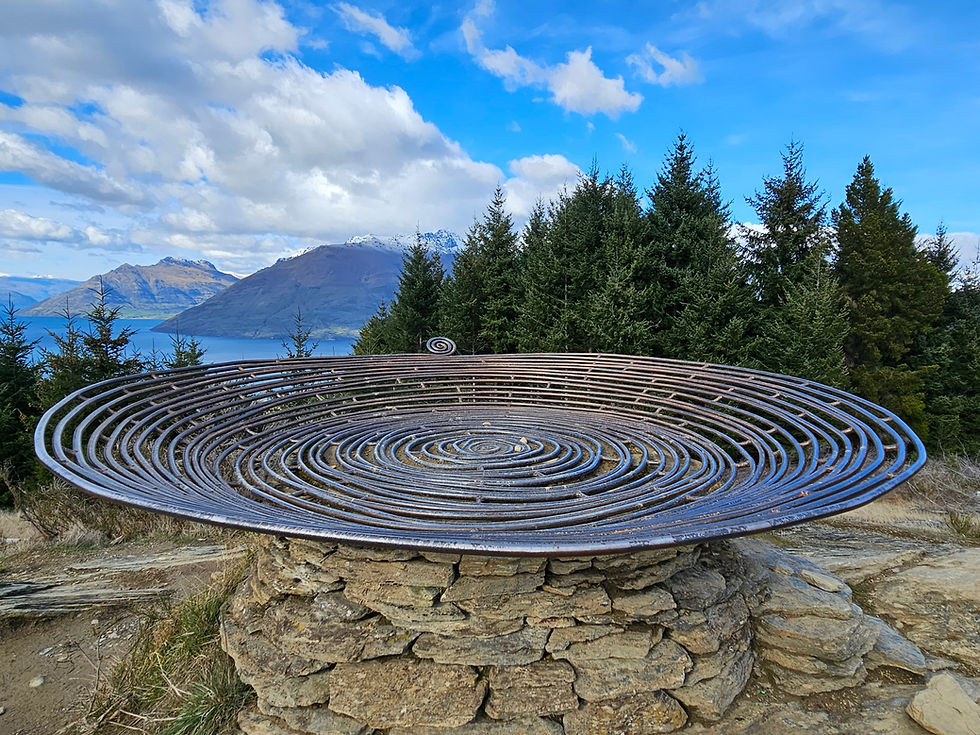
Scholarly write-up, Besides, the pic is stunning too!👍
"knowledge, I realised, is not the same as operability" - wisdom! Memory saved for the reader! .. such an authentic account drawing resonance in many levels. Thanks for publishing the travel from an internal lens.
S